
















As urban density increases across the Asia-Pacific region, the demand for resilient structural solutions has never been more critical. Traditional construction methods are being re-evaluated to meet the challenges of seismic activity and long-term durability. Dextra Group is leading this evolution by providing high-performance engineering solutions that address the inherent weaknesses of conventional reinforced concrete. By integrating advanced materials into the structural design phase, developers can ensure that buildings and civil infrastructure are better equipped to withstand the dynamic forces of an earthquake while simultaneously reducing maintenance requirements.
The Seismic Challenge for Traditional Concrete
Concrete is an exceptional material for withstanding compressive loads, but it is naturally brittle. In a seismic event, the ground moves rapidly, subjecting structures to intense lateral forces and cycles of tension and compression. Traditional steel-reinforced concrete relies on the ductility of the steel to absorb and dissipate this energy. However, if the steel begins to corrode or if the bond between the concrete and the reinforcement fails, the entire structure becomes vulnerable to catastrophic failure.
In many parts of the APAC region, particularly in coastal or high-humidity environments, steel corrosion is a silent threat to seismic safety. As steel rusts, it expands, causing the surrounding concrete to crack and spall. This weakens the structural core before a seismic event even occurs. This is why engineers are increasingly looking towards non-corrosive alternatives that offer consistent performance over the entire lifecycle of the asset.
Enhancing Ductility with Glass Fibre Reinforcement
The adoption of glass fibre reinforcement represents a significant leap forward in seismic engineering. Unlike steel, glass fibre reinforced polymer (GFRP) is completely immune to chloride ions and chemical attack. This means the internal reinforcement remains intact and functional for decades, ensuring that the structural integrity designed on day one is still present fifty years later.
When used in concrete elements, glass fibre provides several key advantages for seismic resistance:
- High Strength to Weight Ratio: GFRP is significantly lighter than steel while offering higher tensile strength. This reduces the overall dead load of the structure, which in turn reduces the inertial forces acting on the building during an earthquake.
- Elastic Deformation: While steel yields, GFRP remains elastic until failure. When engineered correctly, this property can be used to control how a building moves and recovers from a seismic shock, preventing the permanent deformation often seen in steel-heavy structures.
- Improved Bond Strength: Modern composite reinforcements are designed with specific surface textures that ensure a superior bond with the concrete matrix, preventing the reinforcement from slipping during intense vibrations.
Synergy with High-Performance Rebar Couplers
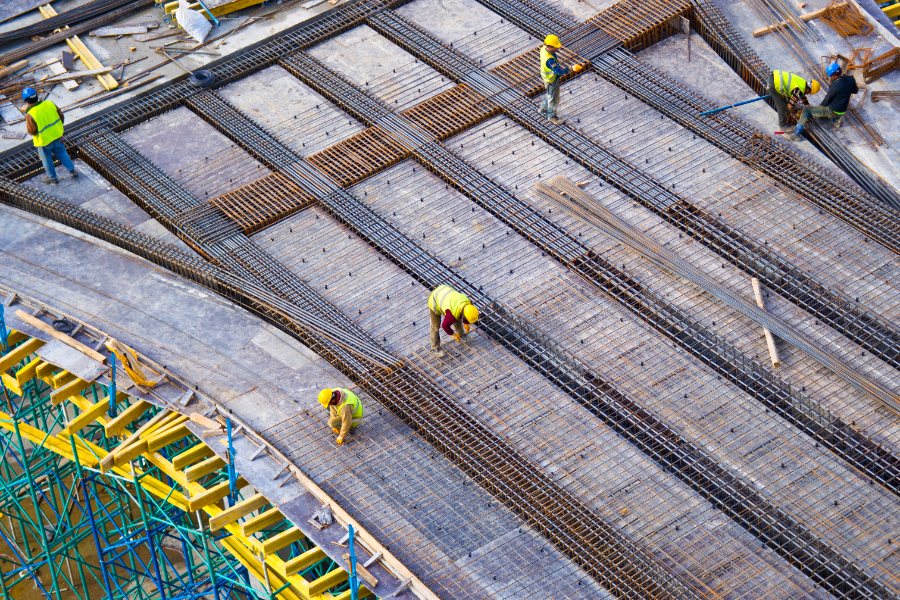
While composite materials offer incredible benefits for durability, the way reinforcement is joined remains a pivot point for structural safety. In many seismic designs, traditional lap splicing (overlapping two bars) can lead to congested concrete zones that are difficult to pour correctly, often resulting in “honeycombing” or weak spots. To solve this, many engineers combine advanced materials with mechanical splicing. Using high-quality rebar couplers ensures a continuous load path that is often stronger than the bar itself. This combination of mechanical precision and advanced material science allows for slimmer columns and more robust joints, which are the most critical areas during a seismic event.
Energy Dissipation and Control
The primary goal of seismic design is not necessarily to keep a building completely rigid, but to control how it moves so that energy is dissipated without causing a collapse. In glass fibre reinforced elements, the inclusion of alkali-resistant glass fibres throughout the mix provides multi-directional reinforcement.
This micro-reinforcement helps to control micro-cracking. In a standard concrete wall, a crack can propagate quickly under seismic stress. In a glass fibre reinforced element, the thousands of tiny fibres act as bridges across these cracks, holding the material together and maintaining the skin of the building. This is particularly vital for the facade and non-structural components of a building, which often pose the greatest risk to life during and after an earthquake due to falling debris.
The Business Case for Advanced Materials
From a developer’s perspective, the move towards advanced reinforcement is a matter of risk mitigation. A strategic approach to construction focuses on the Total Cost of Ownership (TCO). While the initial material cost of specialised composites may differ from bulk steel, the long-term savings are substantial.
- Reduced Remediation: Eliminating corrosion means avoiding the multi-million dollar repair bills that typically plague coastal infrastructure after 20 years.
- Faster Installation: The lightweight nature of glass fibre reinforcement makes it easier to transport and handle on-site, reducing the need for heavy lifting equipment and improving on-site safety.
- Insurance and Compliance: As building codes become stricter regarding seismic performance and climate resilience, using proven high-tech solutions can simplify the certification process and potentially lower insurance premiums for the finished asset.
Global Standards and Regional Adoption
The APAC region is currently a global hub for construction innovation. From the high-tech laboratories in Singapore to the massive infrastructure projects in Australia, the shift towards smart materials is evident. International standards for GFRP reinforcement are becoming more robust, giving engineers the confidence to specify these materials for critical load-bearing applications.
Dextra has been at the centre of this transition, providing the technical expertise required to integrate these materials into complex projects. It is not just about supplying a product; it is about providing the engineering support to ensure that the material is used to its full potential within a seismic design framework. This includes ensuring that joints and connections are engineered to the same high standard as the reinforcement itself.
Conclusion: A Resilient Path Forward
The benefits of glass fibre reinforced concrete for seismic resistance are clear. By preventing corrosion and enhancing the ability of concrete to maintain its integrity under stress, these materials are saving lives and protecting the massive capital investments that define the modern Asia-Pacific landscape. As we look towards the cities of the future, the integration of these advanced solutions will be the hallmark of a truly resilient built environment.