
















There was a time when environmental risk sat firmly in the compliance column, something handled by a checklist and revisited once a year before an audit. That’s no longer how it works, or at least not for businesses that want to stay ahead.
Today’s business operates in a new environment that emphasises the importance of such aspects as operational resilience, sustainability and corporate responsibility. Clients, regulators, investors and employees expect companies to be able to actively manage their environmental risks rather than react to the occurrence of an environmental accident. Consequently, environmental risk management is transforming into a competitive advantage for business development.
Environmental Risk Is a Business Risk
One of the things that should be stated explicitly is that an environmental accident is a business accident as well. Spillages of chemicals, contaminations and containments not only cause the environmental problem, but the operational one. Manufacturing processes are stopped, the site is closed for the assessment, workers are moved to deal with the accident and not their primary tasks.
This issue brings quite a number of expenses. Clean-up and remediation expenses vary greatly, starting from tens of thousands and reaching hundreds of thousands of dollars based on the degree of the accident and the material that caused it, excluding regulatory fees, potential legal actions, and expenses of replacing the damaged equipment and goods. Regulatory compliance has also been made tougher.
In addition to this, there is the question of reputation that takes much longer time to recover. More and more often stakeholder confidence depends on the environmental performance of the company. In Australia, the attitude of investors reflects this trend quite well. Research conducted by the Responsible Investment Association Australasia shows that 88 percent of Australians expect their investments to be responsible and ethical, in comparison with 83 percent two years ago. Businesses that cannot show their environmental risk management are filtered before the start of discussion with investors, insurers, and larger commercial clients conducting the supply chain due diligence.
Why Prevention Leads to Better Results
Not just avoidance of fines and fees, but prevention of an environmental accident also helps a company avoid a lot of negative aspects of this issue and its aftermath.
Prevention means reduction of downtime. A business that uses the necessary procedures for handling and storing hazardous materials will have fewer days when manufacturing stops because of the clean-up process, investigation and response of regulatory bodies. It is the same situation regarding remediation expenses. Spillage contained in the source area requires a much smaller amount of money in comparison with the one spread in the warehouse or even spilled into the stormwater or soil.
Workplace safety is improved in this way as well, since the same methods that prevent environmental problems help reduce the risks for the employees working in the vicinity of chemicals, fuels, oils and other harmful substances. Business continuity is positively affected as well – less disruptions mean fewer problems with meeting deadlines and explaining it in the supply chain. Besides, a company with a good history of preventive risk management is often seen as a mature organisation.
Practical Actions Supporting Environmental Risk Management
All of this cannot be done by simply putting a strategy on paper and leaving it in the folder. Environmental risk management proves to be most efficient when there are practical measures included in it, not the separate project that is conducted along with the actual work.
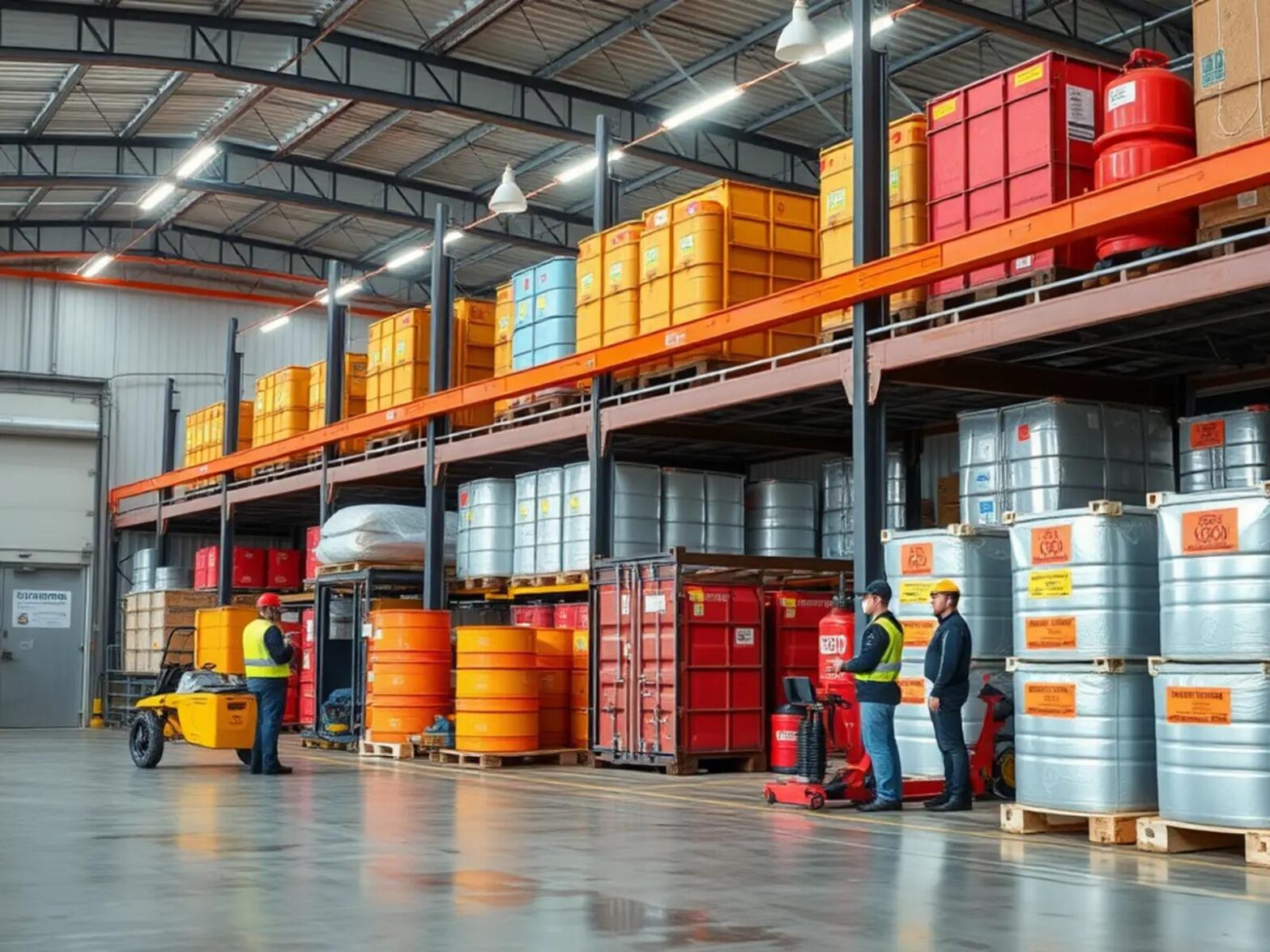
Companies that store or handle fuels, chemicals, oils, and other hazardous materials often implement measures to reduce the risk and impact of accidental spills while supporting safer day-to-day operations. One commonly adopted solution is bunding, which provides secondary containment for hazardous liquids. When incorporated into a broader environmental risk management strategy, bunding can help minimise the impact of accidental spills, support regulatory compliance, and contribute to safer workplaces. While relatively simple to implement, it is a practical measure that helps businesses strengthen their environmental protection practices.
Those businesses that receive more benefit from environmental risk management usually include these measures into routine operation in warehouses, manufacturing sites and logistics centers rather than reacting to a close accident or a recommendation from a regulator.
Generating Business Value
When combined, these measures produce an effect that is higher than the sum of all of them.
Operational resilience is improved in the sense that fewer disruptions mean more predictable outputs and less unexpected situations for clients counting on them. Risk management in general becomes simpler to show whether it is insurance purposes, tender requirements or the reporting to the management board.
ESG performance is improved directly due to increasing demands of the Australian regulators, and, consequently, the advantages of this performance become more tangible as well, including better access to financing and investment. Lenders and investors prefer companies that are able to provide sustainability reporting and risk management practices. All of this leads to stakeholder confidence as well, whether it is investors calculating the risks, clients choosing the supplier or employees selecting their workplace.
Ultimately, this helps a company to grow sustainably, which means it will have more opportunity, more resources and more confidence to do it.
Conclusion
Environmental risk management is not just a set of measures aimed to meet the compliance requirements. Companies that make investments into proactive risk management practices are better protected against disruptions, are able to keep their reputation and create the base of long-term resilience. With sustainability and operational excellence shaping the future of business, the integration of environmental protection into regular operations becomes the competitive advantage in the Asia-Pacific region.