












The Office Isn’t Dead – It’s Evolving in APAC
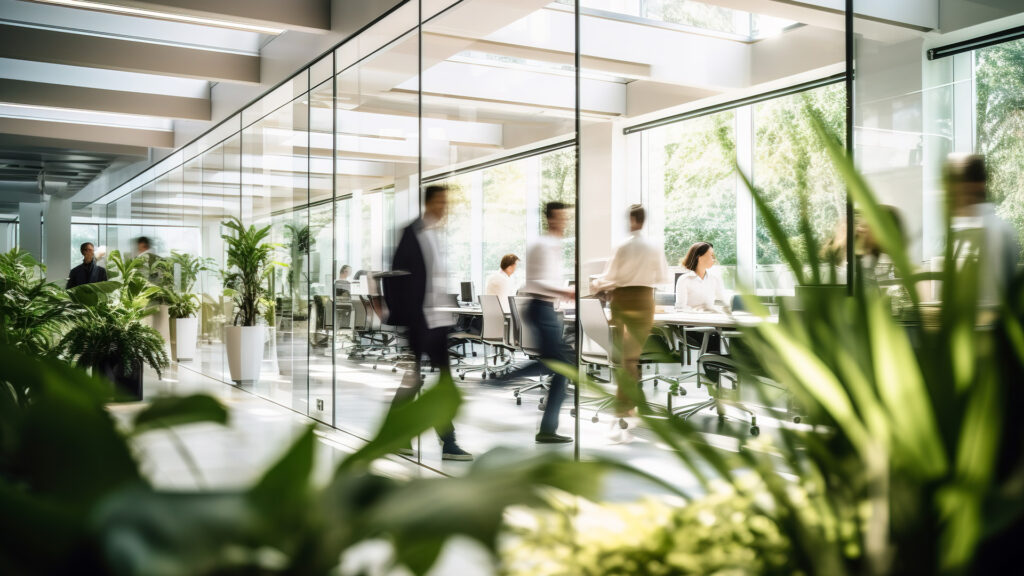
The office isn’t disappearing – it’s transforming, and will continue to do so in 2026. Businesses are seeking agility, efficiency and environments that enhance culture and performance. For many, flexible workspace now offers the most compelling path forward: less risk, more choice, and the ability to adapt in real time.
The Instant Group, the largest global marketplace for flexible workspace, has released its outlook on the top five trends set to redefine how people and companies work in 2026.
1. Enterprise Flex Will Continue to Go Mainstream
Large organisations are now the biggest drivers of flexible workspace demand. What began as small-team coworking has evolved into enterprise-level, customised flex offices. Businesses are using flexible space to reduce long-term lease risk, enter new markets faster and create suburban hubs that support employee satisfaction.
For companies reassessing their portfolios, flex is no longer a contingency plan – it has become a core real estate strategy. Across APAC, The Instant Group’s data shows that 68% of enterprise organisations (10,000+ employees) now operate flexible or hybrid models. In Australia and New Zealand, 32% of all flexible workspace demand in H1 2025 came from enterprise clients – up from just 18% in 2022. Instant expects this trend to accelerate in 2026 as businesses continue to re-evaluate and future-proof their portfolios.
2. Secondary Cities and Suburban Work Hubs Surge
With hybrid work redefining how, when and where people work, companies are increasingly offering workspaces closer to where employees live. Smaller cities, towns and suburbs are seeing some of the strongest flex-demand growth across APAC, providing workers with professional, well-equipped spaces without the friction of long commutes.
Instant’s data shows that the fastest growth in flexible workspace demand in 2025 occurred in smaller cities and towns with populations under 500,000 – up 25% compared with 2024. In addition, workspace enquiries in Melbourne suburbs grew 104% year-on-year (H1 2025 vs H1 2024), with Sydney suburbs seeing 42% growth over the same period. This decentralised approach helps organisations retain talent and reduce overheads. Instant predicts demand for suburban work hubs will continue to increase in 2026 and beyond.
3. Wellbeing, Health and Safety Become Core to Office Design
In 2026, employers will continue to prioritise offices that support both physical and psychological wellbeing – from improved air and light quality to spaces designed for focus, collaboration, social connection and movement. This shift is already underway in APAC. KMC Solutions, a Philippine flexible workspace provider, recently became the first globally to achieve three WELL ratings across its entire portfolio, signalling a new benchmark for workplace health, safety and equity.
Instant’s data shows APAC employees working in flexible environments report significantly better outcomes: 84% say their physical health has improved, 83% report better mental wellbeing, and 86% feel more productive compared to only 65% in the company’s main office. In 2026, offices will evolve into healthier, safer, more thoughtfully designed spaces that tangibly improve employee experience and performance.
4. AI Becomes the Everyday Work Co-Pilot
In 2026, hybrid teams will more regularly integrate AI copilots into their daily operations. These systems will significantly reduce the need for simple tasks such as admin, knowledge retrieval, and scheduling. Employees will find themselves with more time for creative work, able to tackle complex problem-solving tasks, and develop meaningful relationships. Moreover, this transformation will enable individuals to better manage their work-life balance, ultimately leading to increased productivity and job satisfaction. This shift is being accelerated by a new wave of intergenerational collaboration. Research from IWG reveals that 62% of Gen Z employees are already coaching older colleagues on how to use AI to boost productivity and efficiency. In turn, 77% of Directors and Senior Directors have said this has boosted productivity levels, while 80% said it unlocked new business opportunities.
5. Sustainability and ESG Become Non-Negotiable
As organisations push toward net-zero goals, sustainability is becoming a decisive factor in workplace procurement – a trend set to intensify in 2026. Businesses will prioritise energy-efficient buildings, low-carbon fit-outs, ethical supply chains and flexible solutions that minimise the environmental impact of underused long-term leases. Operators able to demonstrate measurable ESG performance will gain the trust of increasingly climate-conscious occupiers.