















Your office doesn’t work the way it used to. And your lockers definitely don’t.
Three days in the office, two at home. Hot-desking. Teams that rotate shifts. Personal lockers that sit empty half the week while shared spaces overflow with clutter.
Across Australia, New Zealand, and Southeast Asia, facility managers are facing a problem their old storage systems weren’t built for. The infrastructure that worked in 2010—fixed employee lockers, one per person, bolted down forever—falls apart when work becomes flexible.
The good news? Workplaces that are getting ahead aren’t reinventing storage. They’re upgrading to systems that actually adapt to how people work now.
Why Your Current Storage Setup is Failing You
Think about what happens on a Tuesday in your office right now.
Team A is in three days a week. Their assigned lockers are empty. Team B works different shifts, needs quick access to shared tools, but the storage is designed for individual cubbies. Someone’s personal gear is blocking the fire exit. Your facilities team is spending two hours a week moving things around.
Traditional metal and chipboard lockers assume permanence. Assigned storage. Five-days-a-week office culture. None of that applies anymore.
The real problem isn’t just inflexibility, though. In Australia’s coastal regions and Southeast Asia’s humidity, cheap metal rusts. Chipboard warps and deteriorates. Your facilities team spends a quarter of their time fixing, repainting, and replacing lockers that should last a decade but don’t make it past three years.
And then there’s the intangible cost: employees frustrated they can’t find secure storage. Items going missing. The growing feeling that the workspace was designed for a different era.
What Hybrid-Ready Storage Actually Looks Like
Here’s what separates workplaces that are managing hybrid well from ones that are struggling:
They use modular storage. Not fixed rows. Modular systems let you reconfigure without renovation. Need more secure storage near the entrance for hot-desking staff? Add lockers there. Concentrating tool storage near the workshop? Stack them where they’re actually used. As your floor plan evolves—because it will—your storage adapts with it. For businesses that need additional space beyond the workplace, flexible self storage solutions can also help manage equipment, documents, and seasonal inventory without committing to permanent expansion.
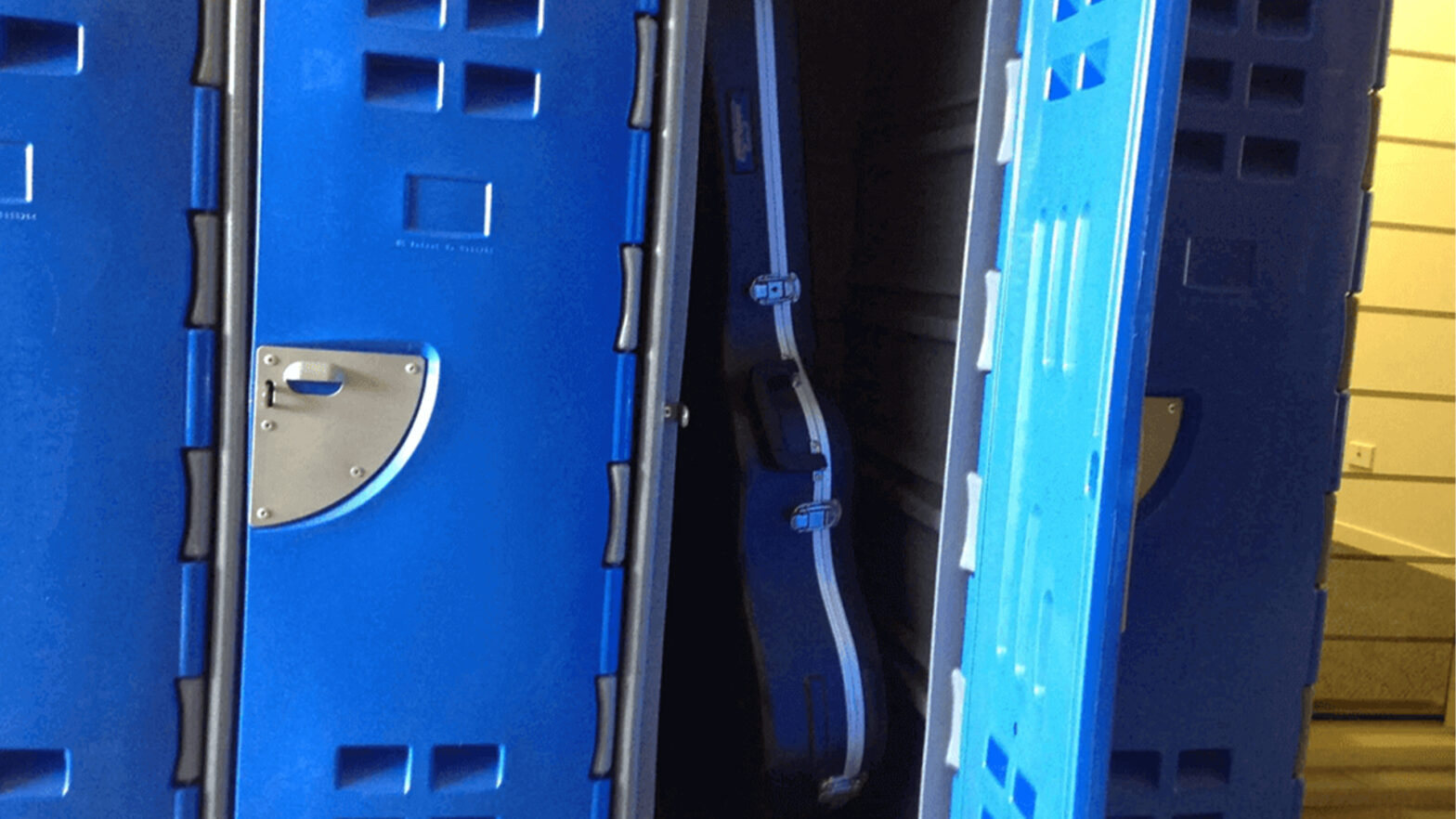
They invest in materials built for the climate. Industrial-grade polyethylene doesn’t rust in salt air. It doesn’t warp in humidity. It handles the temperature swings that destroy metal and wood. We’ve seen lockers installed in Australian coastal facilities eight years ago still looking like new. Compare that to the metal lockers from the same era—now flaking, dented, expensive to maintain.
They design for real flexibility. Digital locks. Padlock-ready hardware. Master key systems. Designs that work whether you’re assigning storage to specific employees or running true hot-desking. Not one-size-fits-all. Flexible.
And they don’t sacrifice aesthetics. Twenty-five color options. Clean lines. Design that actually fits a modern workplace instead of screaming “industrial storage room.” Your lockers either fade into the background as a professional detail or become a design accent. Choice is yours.
Where the Money Actually Comes Back
Facility managers we’ve worked with report something interesting: after upgrading storage, three costs drop fast.
Maintenance disappears. No more repainting corroded metal. No more replacing warped panels. No more replacing locks. One facilities manager at a 200-person office said she went from 3–4 hours per month on locker maintenance to almost zero. That’s 36–48 hours a year back.
Theft and lost items drop. Secure personal storage actually gets used when it’s available and convenient. Sensitive equipment stays put. The number of “whose is this?” incidents goes way down.
Employee satisfaction shifts in a way that’s hard to quantify but easy to notice. People feel like the workspace respects their needs. They can secure their belongings. The office doesn’t feel chaotic. Morale improves—not because of lockers specifically, but because the whole environment works better.
The math works out: most facilities recoup the investment in 3–5 years through maintenance savings alone. After that, it’s pure benefit.
Stop Waiting for the “Right” Time to Upgrade
Hybrid work isn’t a trend anymore. It’s just work. And the workplaces winning right now are the ones that stopped waiting for things to stabilize and instead built infrastructure that actually works with how people operate.
Storage is infrastructure. It’s not exciting. But when it works, nobody thinks about it. When it doesn’t, it touches everything—from employee frustration to facility costs to security.
If you’re still using storage designed for 2010, that’s the conversation worth having. Not “Can we afford to upgrade?” but “How much is the current system costing us every month?”