

















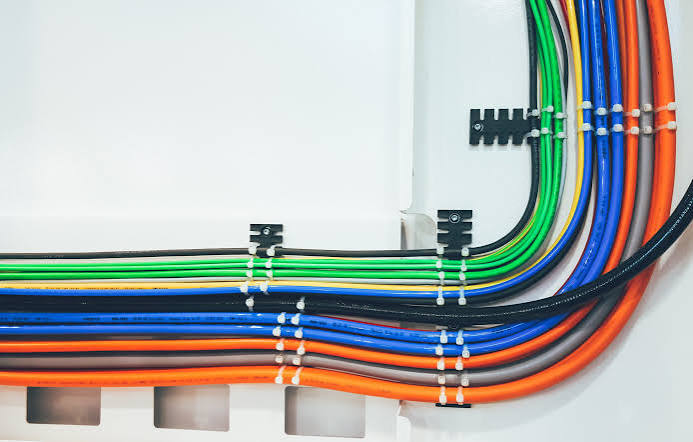
Every few months, another announcement lands about the next leap in enterprise technology, and APAC businesses are adopting it faster than most. New AI capabilities, expanded data centre capacity, faster compute, denser workloads. What rarely gets covered is what’s actually inside the racks once the announcement fades, and specifically, how badly organised most of it is.
That gap matters more than it sounds. The reliability of a data centre or server room depends heavily on the physical infrastructure connecting its equipment, and the physical layer is exactly where most innovation conversations stop paying attention.
The innovation story everyone’s telling
Enterprise AI adoption, growing compute density, and the shift toward hybrid and regional infrastructure have pushed businesses across the region to expand server room capacity faster than at almost any point in the last decade. New deployments, capacity expansions, and infrastructure rollouts have become routine news.
The story that gets told is almost always about capability: more compute, more resilience, more intelligence at the edge. It’s rarely about what happens between the racks that makes any of it work reliably.
The story nobody’s telling
Here’s the problem with rapid innovation cycles: infrastructure teams under pressure to deploy fast tend to prioritise getting hardware racked and powered over how the cabling between it all is run. It works, for a while. Then a fault needs tracing through a rack with no colour-coding, no labelling, and cable runs draped wherever they’d fit at 11pm during a deployment window.
Poor cable management can also interfere with airflow around equipment, particularly in dense rack environments where every degree of cooling headroom matters. It can turn a straightforward fault diagnosis into a much longer troubleshooting exercise, because nobody can trace which patch lead goes where. And it makes every future change, adding a rack, swapping a switch, running a new fibre link, slower and riskier than it needs to be.
Why this gets worse as businesses scale
A single rack with a handful of cables is forgiving. A server room supporting a growing business, or a full data centre supporting hundreds of enterprise clients, is not. What was manageable across a small number of racks can become a genuine operational challenge as the environment expands, and by the time a business has scaled to full data centre capacity, retrofitting proper cable management into infrastructure that was never designed for it is far more disruptive than building it in from the outset.
This is precisely the gap between the innovation headlines and the operational reality. Announcing new capability is straightforward. Running that capability reliably, at scale, over years of moves, adds and changes, depends on decisions made at the cabling layer that almost never make it into a product launch.
What proper infrastructure planning actually looks like
Getting this right isn’t complicated, but it does need to be deliberate rather than an afterthought. Colour-coded, labelled cable runs matter more than they sound like they should, mainly because the technician tracing a fault at 2am is rarely the one who installed it. Slack and strain relief at every termination point, too, so a single pulled cable doesn’t take an adjacent connection down with it.
Vertical and horizontal management belongs in the rack spec from day one. Bolting it on later never quite works as well. And airflow clearance around the bundles counts for more than people expect, given how much heat modern AI-dense hardware already throws off, a problem that’s only getting sharper as regional data centre operators pack more compute into the same footprint.
None of this is glamorous. It’s also the difference between a server room that scales smoothly for five years and one that needs a disruptive, expensive overhaul the first time something goes seriously wrong.
Building it in from the start
For businesses expanding server room or data centre capacity, proper cable management needs to be part of the initial infrastructure plan, not a task somebody gets around to after the racks are already live. That means considering cable management, containment and patch panel layout alongside the compute and power decisions, not weeks after them.
Infrastructure teams who treat this as core planning, rather than tidying up, are the ones who avoid lengthy fault-tracing sessions and the retrofit projects nobody budgeted for.
The innovation story that actually matters
The pace of technology innovation isn’t slowing down, and the headlines will keep chasing capability, capacity and AI readiness numbers. Fair enough, those numbers matter for board decks and investor updates.
But ask any infrastructure engineer six months into managing a rack nobody labelled properly, and capability isn’t what they’re thinking about. They’re thinking about the cable they can’t identify without pulling three others out of the way first. That’s the part of the innovation story that decides whether the investment actually pays off, long after the launch announcement is old news.