








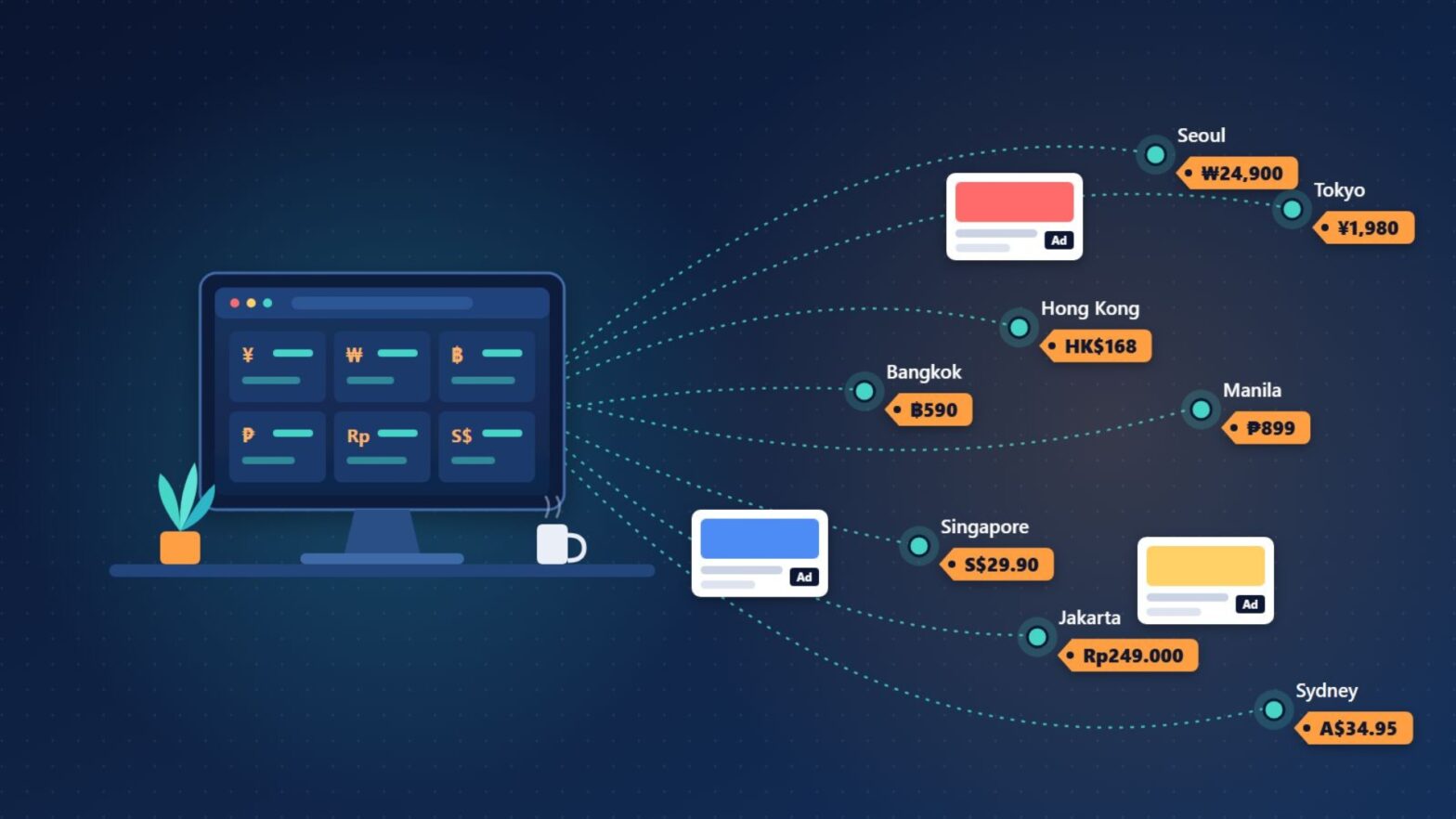








Most regional teams in Asia Pacific run several markets from a single hub. The office might be in Singapore, Sydney or Hong Kong, while the customers are spread from Jakarta to Seoul.
That setup saves money, but it creates a blind spot. When someone at the hub opens a competitor’s site or searches for your brand, they see the hub’s version of the internet. Not Manila’s, and not Osaka’s.
Why the view from head office is misleading
Websites and ad platforms decide what to show partly by where a visitor seems to be. That location usually comes from the IP address, sometimes backed up by language and currency settings.
So a pricing manager in Singapore checking a Thai marketplace may land on the Singapore storefront instead. They might see a different promotion or currency, or get redirected entirely.
Ads work the same way. A campaign aimed at Ho Chi Minh City will rarely show up for someone browsing in Melbourne. That’s the point of geotargeting, but the people approving the media budget often can’t see what they paid for.
Search adds another layer. Rankings can shift by country, language and even city, and several APAC markets have strong local search portals alongside the global ones.
The usual workarounds, and where they fall short
- Asking colleagues in each market. It works the first time. By the fifth request, screenshots arrive late, from different devices, with no clear timestamp.
- Travelling. Great for context, useless for a weekly price check.
- Consumer VPNs. Cheap and quick, but many sites can recognise data centre IP ranges. You may get generic content or extra verification steps.
- Off-the-shelf monitoring tools. Handy for the big marketplaces, but they can miss the smaller regional players your sales team worries about.
How residential proxies let you see what locals see
A residential proxy routes your browser or monitoring tool through a real home connection in the target country. To the website, the visit looks like it comes from an ordinary local user. You get the local storefront, the price in local currency, and the ads served to that audience.
Mobile proxies do the same through carrier networks. This matters a lot in APAC, because in many markets the phone is the main screen for shoppers. A desktop check can still miss what people see in a mobile browser or app.
Choosing Asian proxy locations that match your markets
Start with your sales map, not a provider’s coverage list. If most revenue comes from Indonesia, Vietnam and the Philippines, test those three first.
Then look at how finely you can target inside each country. What a shopper sees in Jakarta can differ from Surabaya, especially delivery fees, stock and local promotions. Ad campaigns can be targeted at city level too.
ProxyEmpire, for instance, offers rotating residential and mobile proxies in all 45 of its Asian proxy locations, with region and city targeting.
Before you commit, check a few things:
- Depth where it counts. A long country list means little if the pool in your main market is thin. Run a test in the countries that drive your numbers.
- Sticky sessions. Following an ad to its landing page, then on to a product’s local price, works better on one IP.
- Billing model. Pricing structures vary, so check whether you’re charged only for successful requests.
- Mobile coverage. If your customers mostly shop on phones, make sure mobile IPs are available in the same countries.
Make it a routine, not a fire drill
The biggest payoff comes from scheduling. A weekly sweep of competitor prices across six markets, run from the hub, replaces dozens of messages to country managers.
Ad checks can run on launch day, then weekly, confirming the right creative and landing page are live in each city.
Keep the scope sensible. Stick to public pages, respect each site’s terms, and check local rules, because data laws differ a lot across the region. Some countries also restrict VPN or proxy use, so a quick note to your legal team is time well spent.
One office, many markets
A single office can cover a dozen markets well. It just has to stop looking at them from the wrong address.
Once the team sees each market the way local customers do, pricing calls and media reviews move faster. Arguments about whose screenshot is right mostly disappear.