















You remember those days, right? You called customer support at 6 PM on a Monday, explained your problem, and were put on hold for what felt like hours. Your call was transferred to multiple departments, and then finally someone agreed to give you a refund. You waited three days for the refund, called customer support again, and were presented with 4-5 options, none of which matched what you needed.
Legacy IVR systems are famous for meting out such mediocre service to millions of customers across the world, not just in the APAC region. Due to this, there’s a quiet revolution brewing in the APAC market where enterprises are in favor of ripping out these rigid systems and utilizing conversational AI voice agents.
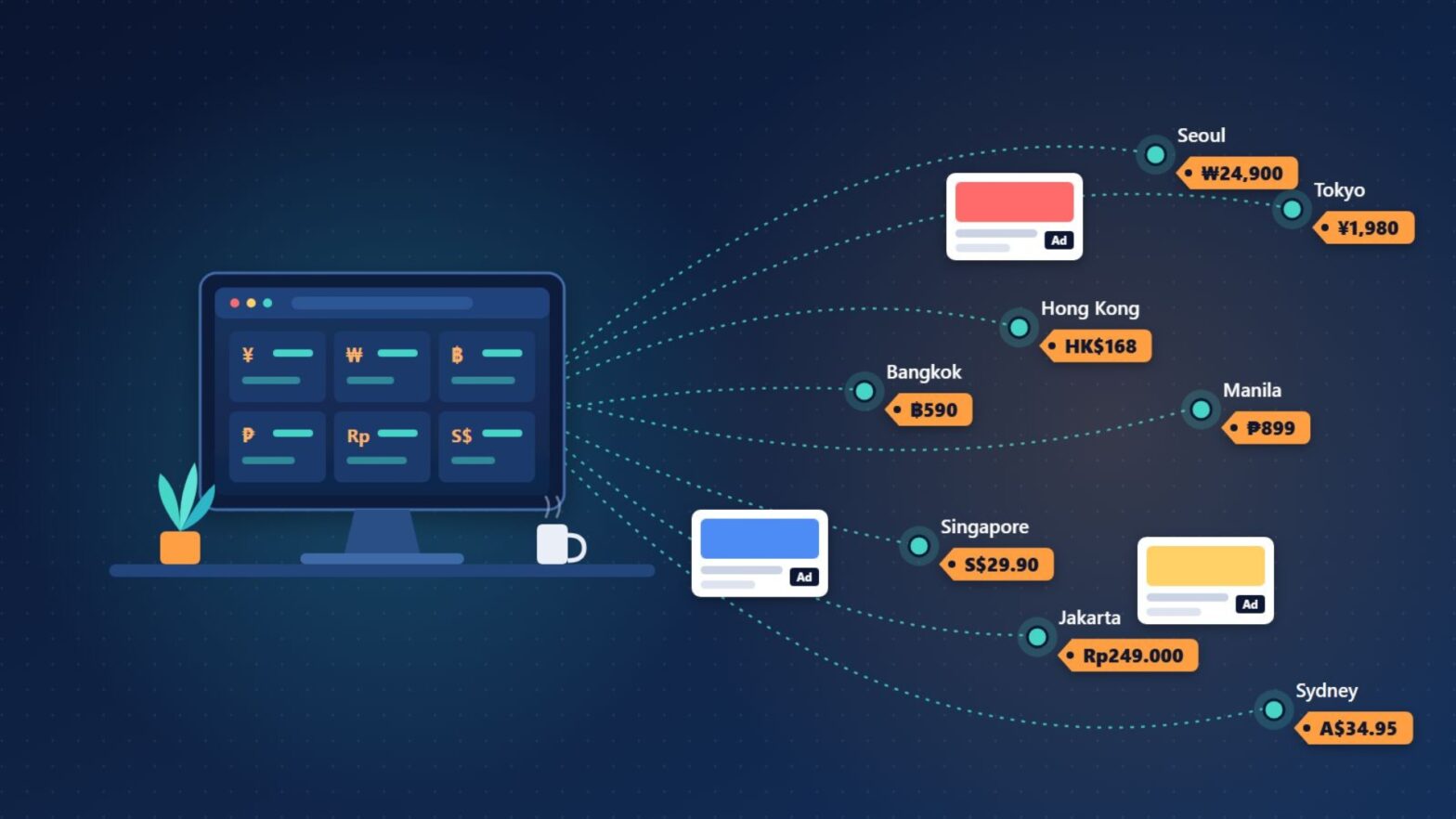
However, the problem in the Asia-Pacific region is much more serious because of the number of languages spoken across Northeast Asia, Southeast Asia, and South Asia. Moreover, only 15% of the Asia-Pacific consumers trust brands to use their personal data responsibly.
While consumer trust is an important aspect and one that has to be won over time, the fifth edition of The State of Customer Experience report found that APAC consumers are much more enthusiastic about AI-powered CX than the global average.
So, keep reading to learn why APAC enterprises are moving from static IVR systems to AI voice agents answering in real time.
Where Do IVR Systems Fall Short?
In the 1970s and 1980s, when IVR was introduced, its purpose was to route thousands of calls without a human operator.
It was revolutionary!
However, the system can only handle simple queries. The moment customers wanted answers to questions that didn’t form one of the menu options, the system simply abandoned the caller. Either the caller has to wait several minutes or even hours to connect with a human agent, or the call would simply drop.
Also, these systems are not cheap. The cost accumulates across three metrics:
●Average handle time
●Abandonment rates
●Repeat costs
When combined, these costs add up to about 20-30% of the total operational cost of the contact center.
In essence, what enterprises are realizing today is that the very system that was designed to reduce costs is bleeding their money. And this is the reason why several companies are openly implementing and exploring the use of an AI voice agent in place of these legacy IVR systems.
Why Are APAC Enterprises Adopting AI Voice Agents for Contact Centers?
As discussed above, the APAC region is multilingual. Also, it accounts for roughly 60% of the global population. The rising volume of calls, labor costs, and multilingual demands have started to expose the limits of legacy IVR systems.
The key drivers behind the transition to AI-first contact centers for better CX are:
●The rising expectations of customers. Nobody has the patience to hold or navigate through multiple IVR menus to find answers to simple questions.
●With more than 3,000 languages spoken in this region, it is essential for bot-led systems to be able to speak regional dialects fluently. This is where conversational AI agents come in the picture. These agents combine native tokenization and diverse acoustic training to understand and reply in the customer’s native tongue.
●The need to reduce cost dependence on aging IVR infrastructure and large human customer support teams.
What AI Voice Agents Do That IVR Systems Cannot?
●Understand natural language: Linguistics is the most fundamental difference. While IVR forces customers to speak the language of the system, AI voice agents speak the language of the caller.
●Retains context across multi-turn calls: The problem with IVR systems is that every call is a fresh one. So, if you need to clarify something the system told you 2 responses ago, you cannot and would have to start all over again. On the other hand, AI voice agents maintain a full conversation arc. They remember what was said during a previous call, reference it, and use it to shape their response. This transforms disconnected calls into a helpful conversation.
●Backend integration: This is probably the most important distinction. While IVR systems only listen, AI voice agents act. Companies connect them to their order management system, CRM , ticketing stack, and billing system. So, suppose a customer is calling to get a refund; the AI agent doesn’t simply route to the refunds department but also validates the request and initiates the refund.
●Graceful escalation: When the AI voice agent reaches a dead end, it gracefully transfers the call to a human agent along with a summary of the entire conversation. So, the customer gets to pick up from where they left off instead of starting afresh.
So, are real-time AI voice agents the next frontier of CX in the APAC region? You could say so, especially when major players like Singapore’s DBS Bank have demonstrated that AI can generate over S$1 billion in annual economic value.
Have you started transitioning yet?